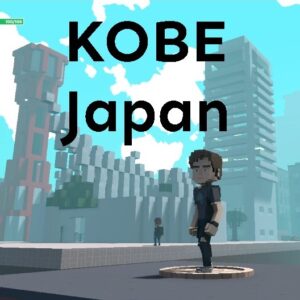
Why I Build Kobe as a Memory, Not a Replica
 kodiad2024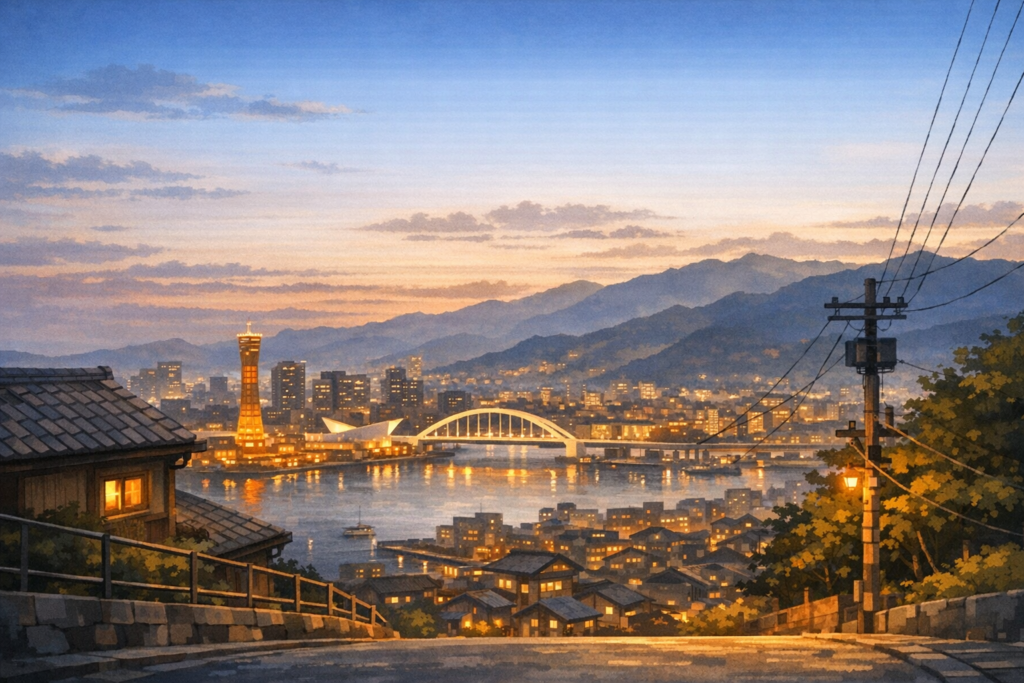
A World Shaped by Impressions
Kobe is a city of beautiful contrasts, uniquely positioned between the deep green mountains and the vast blue sea.
As the sun sets and the soft city lights begin to twinkle, the air itself seems to change.
This Kobe metaverse project, kodiad, is born from these fleeting moments. It is a collection of impressions that shift depending on where you stand—not a rigid, one-to-one recreation.
Why Photorealistic Accuracy Fails Me
To be honest, photorealistic accuracy has never been my strength.
When I try to replicate reality exactly, the process stops being enjoyable, and the unique image I carry inside tends to fade away.
I believe that Kobe is better defined by its "quiet rhythm" and the "scent of memory" than by its blueprints.
In this Kobe art project, I focus on the "Architecture of Silence"—the intentional space (Ma) and the feeling of the wind.
Whether it is the salty breeze of the harbor or the cool, earthy smell of the mountains, I build using fragments of memory that have stayed with me over the years.
Voxels: The Language of Memory
The Sandbox's voxel style is the perfect medium for this vision.
Built from simple, abstract cubes, it leaves room for interpretation and imagination.
This allows kodiad to function as a personal Kobe guide, leading you not just through streets, but through a sensory experience of the city.
Every block I place is a tribute to the invisible bond between the mountains and the sea.
I invite you to step into this diorama and feel the city as I remember it.