🏘️ Best Kobe Guide: Kitano Ijinkan-gai — The Red Brick Echo of History
 kodiad2024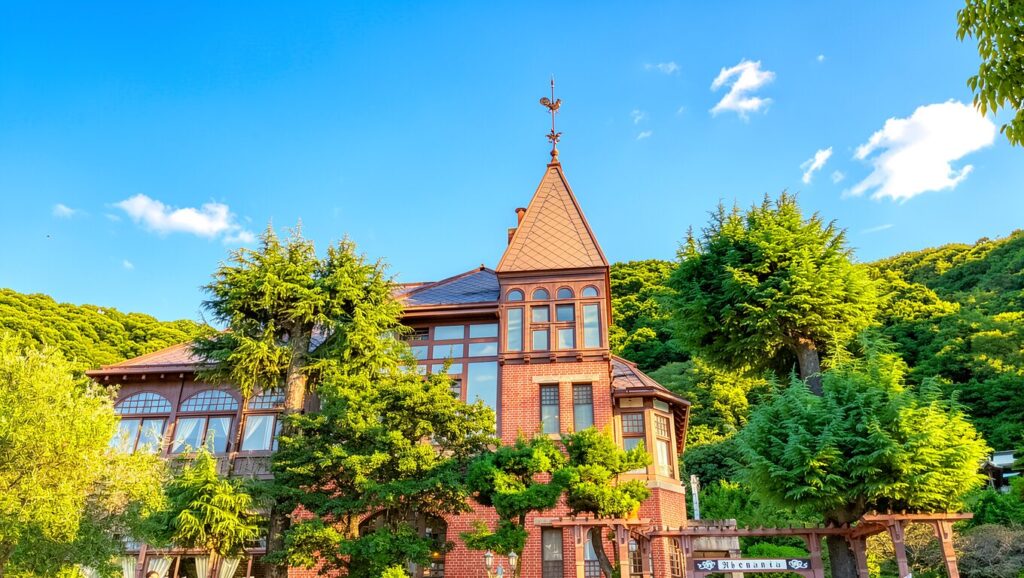
Welcome to our latest Kobe Guide.
Tucked away at the foot of Mt. Rokko, the Kitano Ijinkan-gai area is a living gallery of Kobe's international heritage.
Among these historic residences, the Weathercock House (Kazamidori no Yakata) stands as a masterpiece of red brick and soulful design.
This district offers a unique "Quiet Rhythm," where the whispers of the past meet the refreshing mountain air, making it an essential stop for any authentic Kobe Guide.
🏛️ Architecture: The Weathercock and the "Architecture of Silence"
Built in 1904, the Weathercock House is defined by its striking contrast between the deep red bricks and the surrounding greenery.
In our Kobe Art philosophy, this building represents a solid anchor of memory.
The weathercock perched atop its spire is not just a symbol of the wind; it is a silent observer of the city's evolution.
Here, the "Ma" (intentional space) is felt in the steep slopes and the narrow stone paths that connect these historic homes to the sky.
🕰️ The Legacy of the Thomas Family
The Weathercock House was originally built as the private residence of German trader Gottfried Thomas.
Its distinctive red brick exterior was a rarity in Kobe at the time, and it has since become the most iconic symbol of the Kitano district.
By exploring the interior, you can feel the blend of Western comfort and Japanese craftsmanship that defines the city's early international identity.
🚶 How to Enjoy Your Visit
- Architectural Gaze: Observe the intricate brickwork and how the golden hour sunlight warms the facade, capturing the "Scent of Memory."
- Sensory Walk: Feel the change in air pressure as you climb the "Sannomiya-slope," transitioning from the urban noise to the silence of the heights.
- Panoramic Views: From the nearby Kitano Tenman Shrine, look down at the Weathercock House silhouetted against the harbor's horizon.
☕ Kobe Guide: Nearby Highlights in Kitano
After visiting the Weathercock House, take a short walk to the Moegi House or rest at one of the renovated Starbucks locations in historic buildings nearby.
The Kitano district is best enjoyed slowly, allowing the "Quiet Rhythm" of the slopes to guide your steps.
As a Kobe Guide for art lovers, we recommend bringing a camera to capture the way the light filters through the ancient trees onto the stone pavements.
🧱 Translating Texture into Memory
In kodiad, we believe that the soul of Kobe is found in its textures.
The rough surface of the Thomas Family’s red bricks and the cool metal of the weathercock are not just materials; they are the "Scent of Memory."
When we translate these into voxels on The Sandbox, we focus on the "Ma" (intentional space) between the buildings to preserve the "Quiet Rhythm" that you feel while walking these slopes.
This Kobe Guide aims to bridge the gap between the tangible bricks and our digital diorama.
📍 How to Visit (Access)
- By Foot: A scenic 15-20 minute walk uphill from JR Sannomiya Station or Hankyu/Hanshin Kobe-Sannomiya Station.
- By Bus: Take the "City Loop" bus and get off at the "Kitano Ijinkan" stop.
- Tip: Visit in the early morning to experience the district in its most serene, "silent" state before the crowds arrive.
🎮 Connection to "kodiad"
While the Kitano area is not yet physically built within the Kobe Metaverse, its aesthetic of "Historic Silence" serves as a primary inspiration for our future expansions in The Sandbox.
The textures of these red bricks and the vertical flow of the Kitano slopes are the blueprints for how we translate Kobe's soul into voxels.
We invite you to feel the real wind of Kitano and imagine how its rhythm will eventually breathe life into our digital diorama.
👉 [Experience the "Architecture of Silence" on The Sandbox]
To see how this architectural silence is translated into our diorama world, visit our [Gallery] or learn more about our project on the [Game Introduction] page.